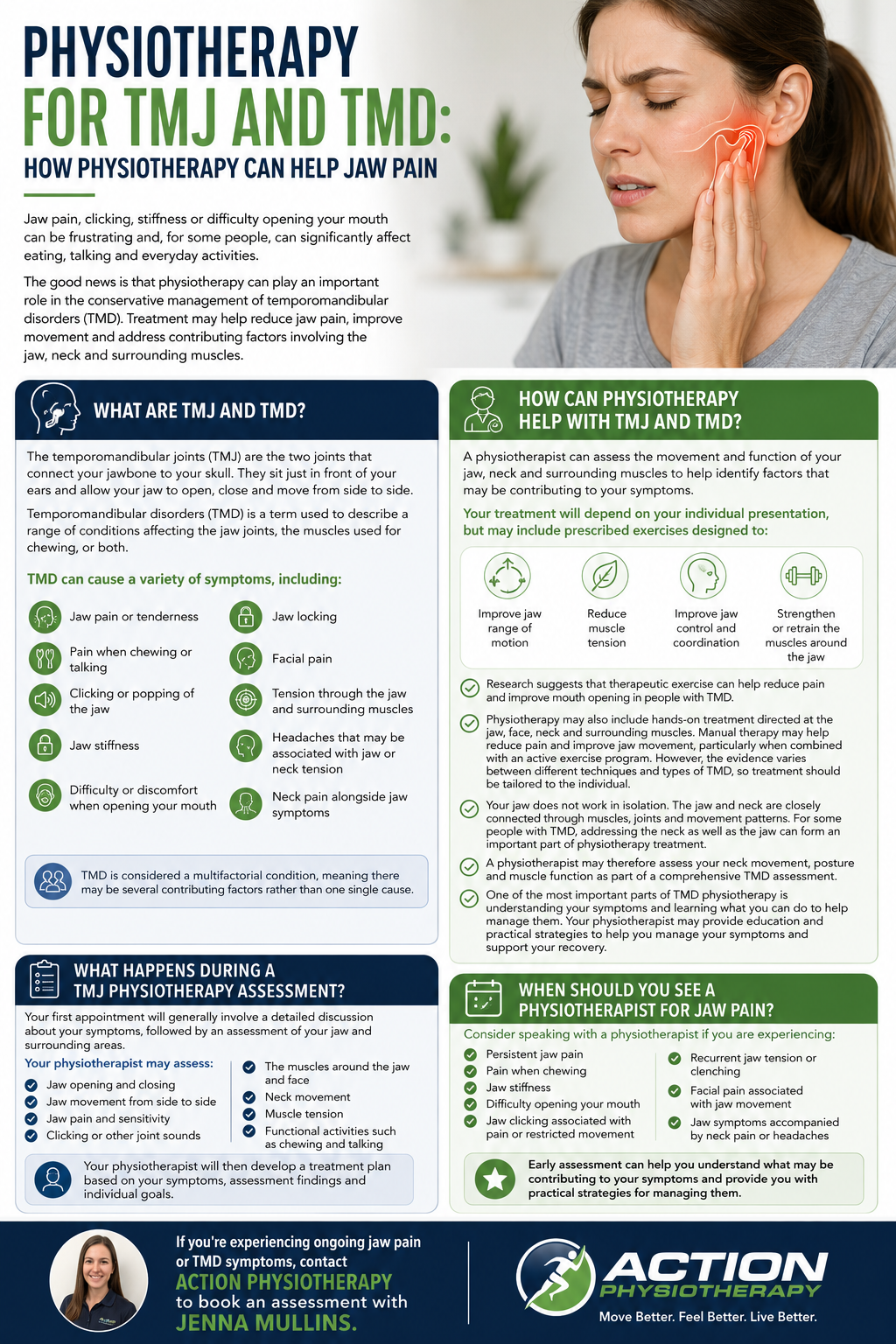
Jaw pain, clicking, stiffness or difficulty opening your mouth can be frustrating and, for some people, can significantly affect eating, talking and everyday activities.
The good news is that physiotherapy can play an important role in the conservative management of temporomandibular disorders (TMD). Treatment may help reduce jaw pain, improve movement and address contributing factors involving the jaw, neck and surrounding muscles.
What are TMJ and TMD?
The temporomandibular joints (TMJ) are the two joints that connect your jawbone to your skull. They sit just in front of your ears and allow your jaw to open, close and move from side to side.
Temporomandibular disorders (TMD) is a term used to describe a range of conditions affecting the jaw joints, the muscles used for chewing, or both.
TMD can cause a variety of symptoms, including:
- Jaw pain or tenderness
- Pain when chewing or talking
- Clicking or popping of the jaw
- Jaw stiffness
- Difficulty or discomfort when opening your mouth
- Jaw locking
- Facial pain
- Tension through the jaw and surrounding muscles
- Headaches that may be associated with jaw or neck tension
- Neck pain alongside jaw symptoms
TMD is considered a multifactorial condition, meaning there may be several contributing factors rather than one single cause.
How can physiotherapy help with TMJ and TMD?
A physiotherapist can assess the movement and function of your jaw, neck and surrounding muscles to help identify factors that may be contributing to your symptoms.
Your treatment will depend on your individual presentation, but may include prescribed exercises designed to:
- Improve jaw range of motion
- Reduce muscle tension
- Improve jaw control and coordination
- Strengthen or retrain the muscles around the jaw
Research suggests that therapeutic exercise can help reduce pain and improve mouth opening in people with TMD.
Physiotherapy may also include hands-on treatment directed at the jaw, face, neck and surrounding muscles. Manual therapy may help reduce pain and improve jaw movement, particularly when combined with an active exercise program. However, the evidence varies between different techniques and types of TMD, so treatment should be tailored to the individual.
Your jaw does not work in isolation. The jaw and neck are closely connected through muscles, joints and movement patterns. For some people with TMD, addressing the neck as well as the jaw can form an important part of physiotherapy treatment.
A physiotherapist may therefore assess your neck movement, posture and muscle function as part of a comprehensive TMD assessment.
One of the most important parts of TMD physiotherapy is understanding your symptoms and learning what you can do to help manage them. Your physiotherapist may provide education and practical strategies to help you manage your symptoms and support your recovery.
What happens during a TMJ physiotherapy assessment?
Your first appointment will generally involve a detailed discussion about your symptoms, followed by an assessment of your jaw and surrounding areas.
Your physiotherapist may assess:
- Jaw opening and closing
- Jaw movement from side to side
- Jaw pain and sensitivity
- Clicking or other joint sounds
- The muscles around the jaw and face
- Neck movement
- Muscle tension
- Functional activities such as chewing and talking
Your physiotherapist will then develop a treatment plan based on your symptoms, assessment findings and individual goals.
When should you see a physiotherapist for jaw pain?
Consider speaking with a physiotherapist if you are experiencing:
- Persistent jaw pain
- Pain when chewing
- Jaw stiffness
- Difficulty opening your mouth
- Jaw clicking associated with pain or restricted movement
- Recurrent jaw tension or clenching
- Facial pain associated with jaw movement
- Jaw symptoms accompanied by neck pain or headaches
Early assessment can help you understand what may be contributing to your symptoms and provide you with practical strategies for managing them.
If you're experiencing ongoing jaw pain or TMD symptoms, contact Action Physiotherapy to book an assessment with Jenna Mullins.