Pain is something we all experience, but it is often more complex than simply
“something hurts, therefore something must be damaged.”
At
Action Physiotherapy Newcastle, we regularly treat people with acute and persistent pain, including back pain, neck pain and joint pain. An important part of rehabilitation is helping people understand what pain actually means.
Modern pain science, including the work of pain researchers and educators
David Butler and Professor Lorimer Moseley, has helped change the way we understand pain.
Pain Does Not Always Equal Tissue Damage
One of the most important concepts in modern pain science is:
The amount of pain you experience does not necessarily reflect the amount of tissue damage present.
Consider two very different situations.
A tiny paper cut can be surprisingly painful despite causing very little tissue damage. At the other extreme, there are documented situations where people sustain significant traumatic injuries but initially experience surprisingly little pain.
Why?
Because pain is not simply a measurement of damage.
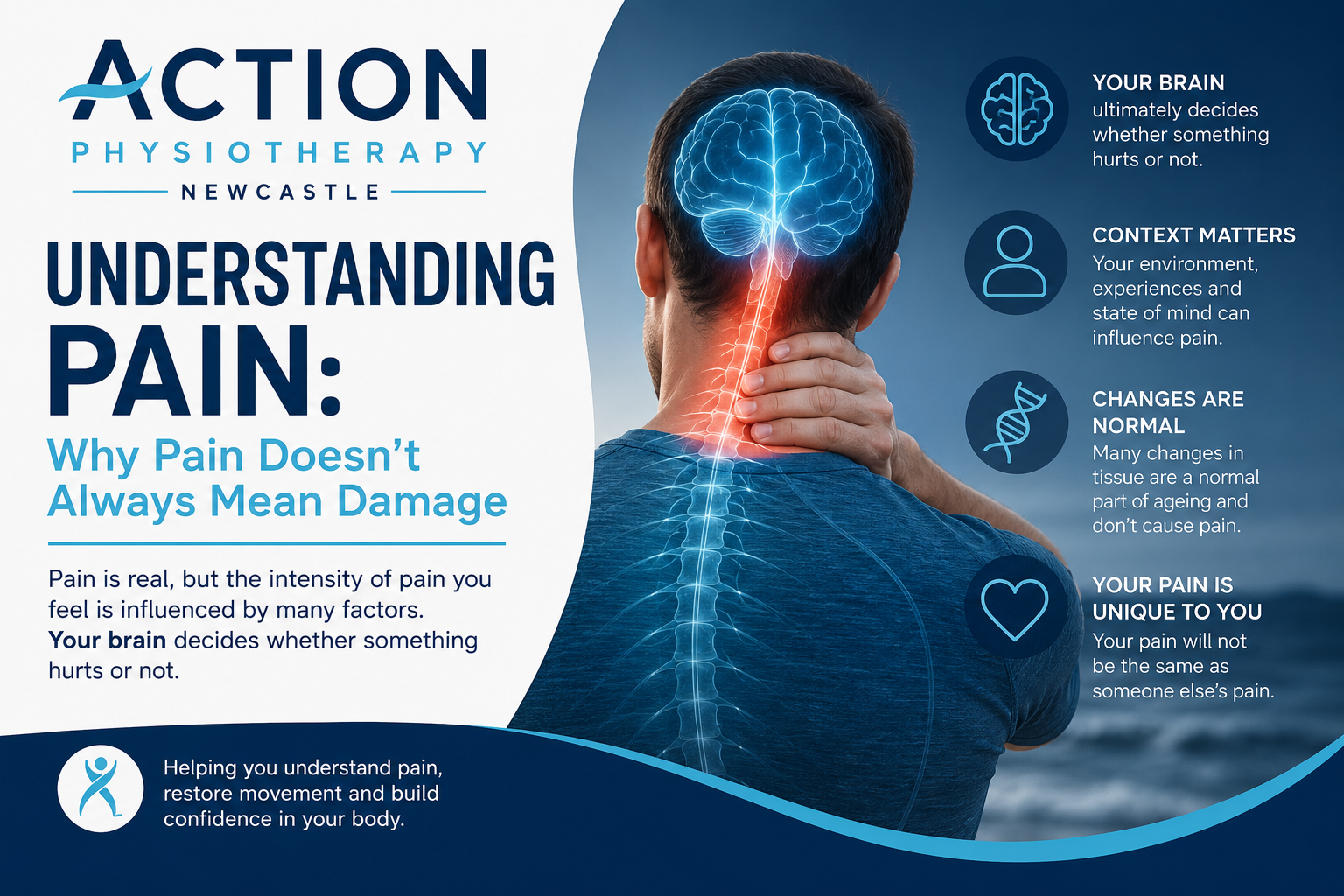
Pain is a
protective experience produced by the brain when it concludes that your body may be in danger and needs protecting.
This doesn't mean pain isn't real. Pain is always real. However, understanding why the nervous system is producing pain can be extremely important when recovering from an injury or managing persistent pain.
Your Brain Ultimately Decides Whether Something Hurts
When something happens to our body, sensory information travels through the nervous system toward the brain.
The brain then interprets this information alongside many other factors, including:
- Previous experiences
- Your environment
- Stress and anxiety
- Your beliefs about the injury
- What you have been told about your condition
- Sleep and fatigue
- Your emotional state
- Whether the brain believes you are safe or threatened
Pain is therefore influenced not only by what is happening in the tissues, but also by
the context surrounding those signals.
Context Can Dramatically Change Pain
A well-known example used when teaching pain science involves a surfer who feels something bump their leg while concentrating on catching a wave.
Initially, they may experience surprisingly little pain.
Only when they realise that the injury was caused by a shark does the situation suddenly become extremely threatening — and their pain can increase dramatically.
The injury hasn't suddenly become worse. What has changed is the brain's understanding of the situation.
The brain now has very good reason to believe the body is in danger.
This demonstrates an important principle:
Our sensory information has context, and that context can influence the pain we experience.
Changes on Scans Don't Always Mean Pain
As we get older, our bodies naturally change.
MRI and X-ray scans commonly identify changes in joints, discs, tendons and other tissues — including in people who have absolutely no pain.
Many of these findings are simply part of normal ageing.
Just as we develop wrinkles and grey hair, our joints and spine change over time.
If the nervous system doesn't perceive these changes as threatening and we continue to move and function well, they may cause no symptoms whatsoever.
This is why at
Action Physiotherapy Newcastle, we don't treat an MRI scan —
we treat the person.
Imaging can provide valuable information, but it needs to be interpreted alongside your symptoms, physical examination, strength, mobility and functional capacity.
Your State of Mind Can Influence Pain
Pain isn't purely a physical experience.
Our emotional and physical pain systems share some similarities within the nervous system. Stress, fear, anxiety, previous experiences and our expectations can all influence how strongly our nervous system responds to a situation.
An interesting example is
Couvade syndrome, sometimes called sympathetic pregnancy, where partners of pregnant women can experience symptoms associated with pregnancy and childbirth despite not being pregnant themselves.
It demonstrates just how powerful and complex the relationship between our brain, body and environment can be.
Importantly, saying that psychological or emotional factors influence pain does
not mean that pain is imaginary.
Instead, it recognises that pain is produced by a sophisticated nervous system that continuously considers information from both inside and outside the body.
Your Pain Is Unique to You
Two people can have almost identical injuries or imaging findings and experience completely different levels of pain.
One person may recover quickly, while another develops persistent symptoms.
This is because pain is influenced by a combination of:
Tissue health + nervous system sensitivity + previous experiences + beliefs + emotions + environment + overall health + context.
Your pain therefore cannot be directly compared with someone else's.
Why Understanding Pain Can Help Recovery
Understanding pain can be an important part of rehabilitation, particularly for people experiencing persistent back or neck pain.
When people believe that every painful movement is causing further damage, it is understandable that they become cautious and avoid movement.
Over time, however, excessive avoidance can contribute to reduced movement, loss of strength and confidence, and increased sensitivity of the nervous system.
Rehabilitation can gradually help change this.
At
Action Physiotherapy Newcastle, our goal isn't simply to reduce pain temporarily. We want to help people understand their condition and progressively rebuild their
movement, strength, confidence and capacity.
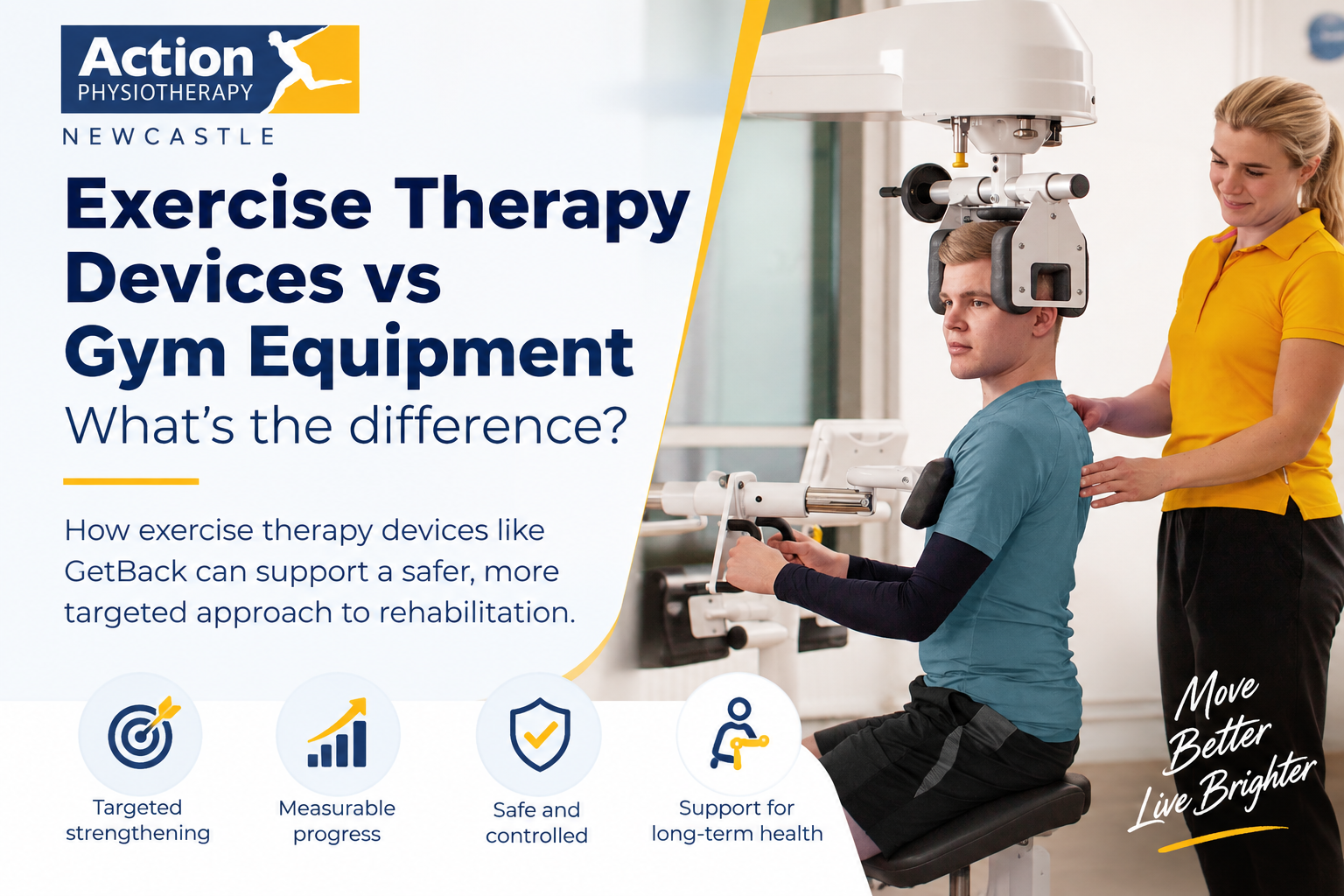
For people with persistent back and neck pain, this may include a combination of physiotherapy treatment, pain education and our structured
GetBack spinal rehabilitation program, where exercise is gradually progressed according to the individual's ability.
Pain Is Protective — But Sometimes the Alarm Becomes Too Sensitive
One useful way of thinking about persistent pain is like a home alarm system.
An alarm is designed to protect your house.
But imagine if the alarm became so sensitive that it went off every time someone walked past the front door.
The alarm is still working —
it's simply become too protective.
Something similar can happen with persistent pain. The nervous system can become more sensitive and begin producing pain during activities or movements that are not necessarily causing further tissue damage.
Rehabilitation aims to gradually show the nervous system that movement is safe again.
This can involve:
Education + gradual movement + progressive strengthening + improving confidence + returning to meaningful activities.
Over time, the aim is to build a stronger, more capable body while reducing the nervous system's need to protect you with pain.
The Take-Home Message
Pain is real, but
pain does not always equal damage.
The intensity of pain you experience is influenced by much more than the physical condition of your tissues. Your nervous system, environment, previous experiences, emotions, beliefs and perception of threat can all influence your pain experience.
Understanding this can be an important first step towards becoming less fearful of pain and more confident with movement.
At
Action Physiotherapy Newcastle, we combine pain education with physiotherapy, progressive exercise and objective assessment to help people with back pain, neck pain and musculoskeletal conditions understand their symptoms and confidently return to the activities that matter to them.
Action Physiotherapy Newcastle
Helping you understand pain, restore movement and build confidence in your body.